
Editor-in-Chief’s Preamble:
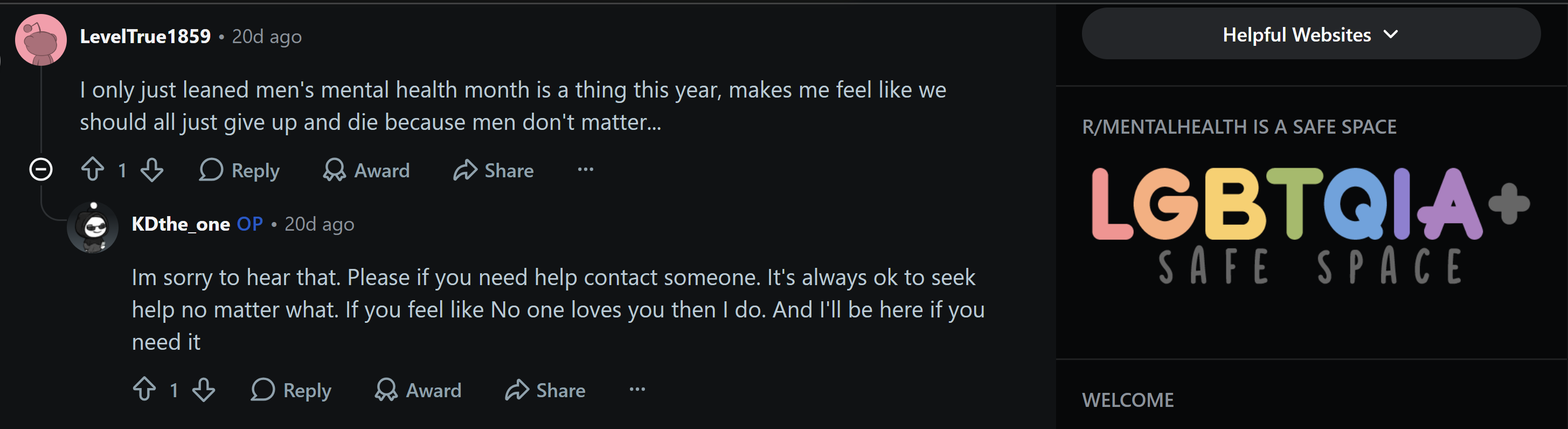
The Op-Ed below, written by our Deputy Editor, is our message as we are culminating the month of June, recognized by most countries as the Pride Month. Personally, as a cisgender male who is also a member of the queer community, I have one big reservation: the fact that Pride month totally overshadows the “Men’s Mental Health Month” which suspiciously was moved from May to June a couple of decades ago! In Canada, men account for nearly 75% of suicide deaths and die by suicide at three times the rate of women. Men also make up 72% of all opioid toxicity deaths amongst all genders (including gender minorities). June is a confusing time for me personally, since as I mentioned, I also have identity affiliation with queer community: should we focus more on the group who has less rights, but more media and trends behind it? Or the group whose mental needs have always been neglected, but has benefited from undeniable privileges? As young academic here at The Scattered Pelican, we ask the questions; we do not claim to have the right answers! But I cannot deny that if it was up to me, I would simply move Men’s Mental Health Month to another time, when it is not overshadowed by the noisy activities of another trendy advocacy movement. Men in the 21st century, have lost their role in society, which can lead to identity and existential crises. They are losing their old masculine role, but have not provided with an alternative. They are expected “not to act like a traditional man”, but also required not to show too much vulnerability. I do not claim men are the victims, because clearly they are not; and when they are, it is usually a result of the very same patriarchal structure that other gender groups have been suffering from. But as we progress in legally and socially supporting other genders and celebrating plurality of sexual orientations, we must not forget that for better or for worse, men are still part of our human community, and not all of them are benefiting from the old social structures; everyday more of them are conceding their mental health to stigmas, expectations, and even maltreatments they receive not because of what they have done, but because of how their ancestors structured the social arrangements.
Sohrab Mosahebi
Editor-in-Chief
Opinion: We are chronically online in an era of constant hateful discourse. Strengthening local community is crucial to the ongoing fight.
On the 57th anniversary of the Stonewall riots, we continue to fight for our rights to exist. This fight may have evolved into different shapes, but the current political climate across the world shows that it is as necessary as ever. Countries like Canada do offer federal protections for queer people, but it is hard to ignore how fragile these protections might end up being. Concerns about how tenuous protections for 2SLBQTIA+ people can be are not only influenced by provincial tensions or what is happening across the border, but by the rise of far-right extremism across the world. There are various factors (historical, cultural, economical, social, etc.) influencing the prevalence of fascism, but this global status quo highlights the vulnerability of the queer community. Various studies in both the US and Canada have shown that hate crimes against trans people of colour in particular are consistently rising, highlighting the direct effect of hate rhetoric on the community and the most at-risk individuals within it.
Online discourse is shaped by this rhetoric, functioning as a tool for spreading misinformation and hatred at a volume that can frequently not be ignored. It usually doesn’t take more than a few minutes on any of the leading social media platforms (especially the one formely known as Twitter) to be utterly mired in hate speech. We are so used to being online these days, and the many effects of being exposed to the constant loudness of far-right discourse are being studied in detail through the combined efforts of academics at various universities. Toronto Metropolitan University’s The Dais has been surveying online harm since 2019. Their findings show that Canadian residents whom are people of colour, disabled, or 2SLGBTQIA+ are 50% to 100% more likely to be exposed to hate speech than those not in those groups.
Despite this, there are organizations that are safeguarding the rights and wellbeing of queer people, especially in Ontario. There are too many options to name, but I will take the opportunity to focus on some specific cases in London and Toronto that are essential to counteracting a large part of the negativity affecting the queer community. I want to highlight these organizations for the hope and support they bring in a world that is growing ever more unforgiving, especially on the financial side. The initial promises of rainbow capitalism have dwindled, perhaps in the wake of decreasing public support for brands that promote queer rights, and perhaps also due to certain political interests making it less ‘trendy’ to vocally support a community’s right to exist.
At The Scattered Pelican, we wanted to take this opportunity to spotlight these organizations for those wishing to find out more about what support is available. We are not affiliated with these organizations, but wanted to take a moment to celebrate their continued existence during this season and in the face of increasing and constant adversity. The London (Ontario) chapter of pFLAG offers various monthly peer supports groups that are open to everyone, and organizes community initiatives such as a Queer Food Bank and IDAHO events. Open Closet helps queer youth between 14 and 18 years old with weekly drop-in social support sessions. Queer Intersections is a London-based initiative with a mission to create safe spaces for the queer community. They offer regular programming full of social events and community-building activities. The Get Real Movement began as a Western student project and has since evolved to include extensive programming that supports the community and combats discrimination, including workshop models and leadership development opportunities. The Trans* London Facebook Group also continues to be an ongoing resource and a great way to get in touch with community events and support. Wortley Pride offers various community groups and initiatives that go beyond the Pride season.
Over in Toronto, the 519 has been a community staple for over 50 years. It offers numerous services, including health and legal support, and continues to fight to provide safe spaces and access to services for queer people. The ArQuives has been preserving queer history in Canada since 1973, and also provides educational resources and exhibit spaces.
As mentioned, these are just a few of the organizations and resources accessible to the community. While it seems impossible to escape the ever-present negativity of social media, hate speech, and the ongoing political horrors in the world, these organizations provide hope and also highlight the results of an ongoing fight for access and resources. Many of these organizations emerged at times that were fraught with danger and obstacles, and managed to continue doing their work thanks to the efforts of the community. It is easy for us to lose ourselves to the overall gloom, but there are still ways we can combat it, many of which can be achieved by participating in our local community events.
Yasmine Lemnij
Deputy Editor
From The Scattered Pelican, we wish you a Happy Pride and more awareness about Men’s Mental Health!
 The Scattered Pelican